


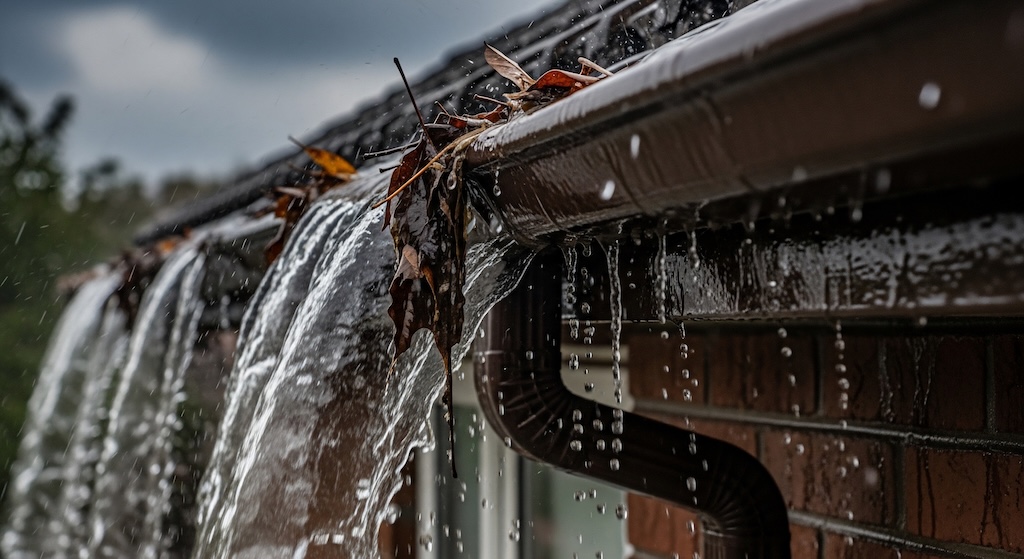
Gutters do an unglamorous but critical job. They collect rainwater from your roof and direct it safely away from your home’s walls and foundations. When they stop working properly, water spills over the edge during rain rather than flowing through the downpipe; it’s easy to dismiss it as a minor nuisance.
It isn’t. Overflowing gutters are one of the leading causes of water damage to Sydney homes, and the damage they cause is rarely cheap to fix.
Here’s why it happens, what the consequences are if it’s left alone, and what the solutions actually look like.
The Most Common Causes of Overflowing Gutters
1. Blockages From Leaves and Debris
This is by far the most frequent cause, particularly in autumn when leaves fall from deciduous trees and accumulate across Sydney’s suburbs.
Leaves, twigs, seed pods, and general roof debris collect in the gutter channel over time. Once a blockage forms, water backs up and overflows the edge rather than making it to the downpipe. The problem gets worse quickly: wet leaves compact, decompose, and create a thick sludge that’s harder to clear and holds more moisture against the gutter surface.
Homes with large gum trees, or other established trees nearby, are at highest risk and typically need gutter cleaning at least twice a year.
2. A Blocked Downpipe
The gutter itself may be perfectly clear, but if the downpipe is blocked by debris, a bird’s nest, or a collapsed section, water has nowhere to go. You’ll often notice this as water running over the front face of the gutter directly above where the downpipe connects.
A blocked downpipe can sometimes be cleared by flushing it from the top with a hose at pressure. If that doesn’t shift it, a plumber with a drain snake or high-pressure jetter is needed.
3. Incorrect Gutter Fall (Gradient)
Gutters aren’t designed to be level; they’re installed at a slight angle (called the fall) so water flows toward the downpipe under gravity. When that gradient is too shallow, water sits in the gutter rather than moving.
Over time, gutters can shift due to:
- Fascia board movement from timber shrinkage or rot
- Loose or failed gutter brackets
- Weight of accumulated debris pulling sections down
If your gutter consistently holds water or drains very slowly even when clean, the fall may need to be corrected by a roofing professional.
4. Undersized Gutters for the Roof Area
In older Sydney homes, gutters were sometimes installed to older design standards that didn’t account for the full roof catchment area. If your home has had extensions added, or if the original gutter size was simply undersized, heavy rain can exceed the gutter’s capacity even when it’s completely clear.
This is most obvious during intense storm events; the overflow isn’t a constant issue, but heavy downpours cause the gutter to flood quickly.
5. Damaged or Rusted Sections
Older steel gutters are prone to rust, particularly in low spots where water regularly sits. Once rust eats through the gutter surface, water leaks directly through the base rather than flowing to the downpipe. Joints between gutter sections are also common failure points; sealant dries out and cracks over time, creating gaps that leak before the gutter even reaches capacity.
The Risks of Leaving Overflowing Gutters Unaddressed
Gutters that consistently overflow aren’t just an eyesore during rain. The water they spill has to go somewhere, and the places it ends up create real structural problems.
Fascia and soffit damage: The fascia board (the timber strip the gutter is attached to) absorbs the overflow water. Once it saturates and begins to rot, it loses the structural integrity needed to hold the gutter, creating a worsening cycle that ends in gutter failure or collapse.
Wall water damage: Water running down the external wall can penetrate render and brickwork, leading to rising damp, mould growth, and internal wall damage.
Foundation and subfloor issues: In homes with a timber subfloor common in older Sydney properties, persistent overflow at the base of the wall saturates the ground near footings. Over time, this can cause subsidence, subfloor rot, and significant structural remediation costs.
Roof damage: When gutters overflow backward rather than forward, water can work its way under the roof tiles or behind the fascia into the roof cavity.
What the Solutions Look Like
Gutter Cleaning
For blockages, a professional gutter clean removes all accumulated debris, checks and clears downpipes, and flushes the system. For most Sydney homes with trees nearby, this should happen at least twice a year in autumn after leaf fall and in spring before storm season.
Gutter Guard Installation
Gutter guard systems mesh covers that sit over the gutter channel significantly reduce debris build-up between cleans. They’re not completely maintenance-free, but they extend the time between cleans and reduce the risk of sudden blockages during storms.
Downpipe Repairs
A blocked or damaged downpipe can often be cleared or repaired without a full gutter replacement. A roofing or plumbing professional can assess whether the issue is a blockage, a dent or collapse in the pipe, or a connection failure.
Gutter Realignment or Replacement
If the fall is incorrect or the gutter itself is damaged, realignment or full replacement is the appropriate fix. Modern aluminium or Colorbond guttering is resistant to rust, lightweight, and available in profiles designed for Sydney’s rainfall intensity.
How to Check Your Gutters Safely From the Ground
You don’t need to get on a ladder to identify most gutter problems.
- During rain, watch where water is coming from; is it overflowing evenly or concentrated at one spot?
- After rain, check the ground beneath your gutters for erosion channels or pooling
- Look along the gutter line from a distance; visible sagging or visible debris above the gutter edge are signs of a problem
- Check your fascia boards at ground level for staining, peeling paint, or softness; these are signs of chronic overflow
Frequently Asked Questions
How often should gutters be cleaned in Sydney? For most Sydney homes, twice a year is the minimum, typically in late autumn once leaves have fallen and again in spring before storm season. Homes with large established trees may need quarterly clearing.
Can overflowing gutters cause rising damp? Yes. Consistent water saturation at the base of walls from gutter overflow is a known contributor to rising damp in Sydney’s older homes, particularly those with brick construction or older damp-proof courses.
Are gutter guards worth it? For homes surrounded by trees, yes, they significantly reduce maintenance frequency and reduce the risk of storm-period blockages. They’re not a permanent fix but extend the interval between professional cleans.
How do I know if my gutter fall is incorrect? The clearest signs are water sitting in the gutter long after rain has stopped, or overflow occurring despite the gutter being clean. A roofing professional can assess and correct the gradient.
Can a plumber help with gutter issues? Yes. Downpipe blockages and drainage issues from gutter overflow into stormwater drains are within a plumber’s scope. For gutter repairs, realignment, or replacement, a licensed roofing contractor is the right call.
Get Your Gutters Sorted Before Winter Rain Arrives
If your gutters are overflowing during rain, even occasionally, it’s worth addressing now rather than waiting for the damage to compound over winter.
The Service Fox team handles gutter repairs, cleaning, and replacements across Sydney. We’ll assess what’s causing the problem and give you a straight answer on what it needs.