


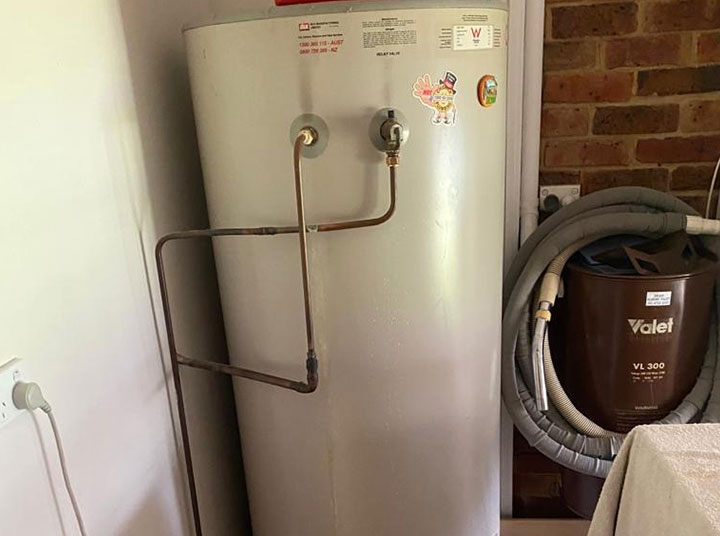
Replacing a hot water system is one of those decisions that catches most homeowners off guard. The old system fails, the pressure is on to get hot water back quickly, and suddenly you’re being asked to choose between options you’ve never thought about before.
Making the right choice now, rather than just replacing like-for-like, can meaningfully reduce your energy bills and set you up with a system that suits your household for the next 10–15 years. Sydney’s climate and household sizes have a direct bearing on which system performs best here, so it’s worth understanding the options before committing.
The Main Types of Hot Water Systems Available in Sydney
1. Electric Storage
The most common system in older Sydney homes. A cylindrical tank holds a fixed volume of water, typically 125 to 400 litres, heated by an internal electric element.
How it works: The element heats water to the set temperature (usually 60°C), and a thermostat cycles the element on as the temperature drops.
Pros:
- Lowest upfront cost of any system type
- Simple installation: no gas line or specific outdoor location required
- Compatible with off-peak electricity tariffs, which can reduce running costs
Cons:
- The highest running costs of all electric options on a standard tariff
- Slower recovery time compared to gas or heat pump
- Fixed storage volume: you can run out if demand exceeds tank size
Best suited to: Smaller households, properties without a gas connection, or as a lower-cost interim replacement.
2. Gas Storage
Similar in form to electric storage, but heated by a gas burner rather than an electric element. Natural gas is available across most of Sydney; LPG is an alternative for properties not on the gas network.
How it works: A gas burner at the base of the tank heats water continuously, with a faster recovery time than electric storage.
Pros:
- Faster recovery than electric storage
- Lower running costs than electric storage on the standard tariff in most Sydney scenarios
- Good performance consistency
Cons:
- Higher upfront cost than electric storage
- Requires a gas connection and a compliant installation
- Ongoing gas supply costs
Best suited for: Households with an existing gas connection seeking reliable performance and lower running costs compared to electric.
3. Gas Continuous Flow (Instantaneous)
Rather than storing a tank of hot water, these systems heat water on demand as it flows through a heat exchanger. They’re usually wall-mounted and much more compact than storage systems.
How it works: When a hot tap is opened, water flows through the heat exchanger and is heated by a gas burner to the set temperature. Water is available continuously as long as the tap is open.
Pros:
- Never runs out of hot water, supply is continuous
- No standby heat loss (energy isn’t used to maintain a stored tank of hot water)
- Compact: frees up floor space compared to a storage tank
- Long product lifespan (15–20 years with servicing)
Cons:
- Higher upfront cost than storage systems
- Requires adequate gas supply: high flow rates need an appropriate gas meter capacity
- May struggle to supply multiple high-demand outlets simultaneously on smaller models
- Minimum flow rate required to activate: very low-flow applications may not trigger the heater
Best suited for: Families and households with high or variable hot water demand, properties with a gas connection, and situations where running out of hot water is a recurring issue.
4. Heat Pump
Heat pump systems use the same technology as a reverse-cycle air conditioner, they extract heat energy from the surrounding air and transfer it to the water in the tank, rather than generating heat directly. They run on electricity but are significantly more efficient than a standard electric element.
How it works: A compressor unit (similar in appearance to a split system outdoor unit) draws heat from the ambient air and transfers it via a refrigerant cycle to the water in the storage tank.
Pros:
- Energy efficiency is typically 3–4 times greater than a standard electric element, meaning lower running costs
- No gas connection required
- Eligible for government rebates in NSW under various energy efficiency schemes
- Environmentally lower-impact than gas or standard electric
Cons:
- The highest upfront cost of the common system types
- Requires adequate space outdoors or in a well-ventilated area, the compressor needs airflow
- Performance is reduced in very cold conditions, though Sydney’s climate is generally suitable year-round
- Produces some noise from the compressor
Best suited to: Households looking to reduce long-term energy costs, properties without a gas connection, and those considering environmental impact.
5. Solar Hot Water
Solar systems use roof-mounted collectors to capture energy from the sun and heat water, which is stored in a tank, either on the roof (close-coupled) or at ground level (split system). A gas or electric booster supplements the solar collection on overcast days or during periods of high demand.
How it works: Water or a heat-transfer fluid circulates through solar collectors on the roof, absorbing heat, and returns to the storage tank.
Pros:
- Lowest ongoing running costs when solar resource is good
- Eligible for federal government renewable energy incentives (STCs)
- Very low carbon footprint once installed
Cons:
- Highest upfront cost
- Performance varies with available sunlight, booster still required for a consistent supply
- Roof space and orientation required, north-facing roof area is optimal in Sydney
- More components and potential maintenance points than other system types
Best suited to: Households with appropriate roof orientation and space, those prioritising long-term running cost minimisation, and properties where occupants are generally home during daylight hours.
Key Factors for Sydney Households
- Household Size
Tank size and system type should match your household’s demand:
| Household Size | Recommended Storage Volume |
| 1–2 people | 125–160 litres |
| 3–4 people | 160–250 litres |
| 5+ people | 250–315 litres, or continuous flow |
For continuous flow systems, flow rate capacity (measured in litres per minute) is the relevant spec.
- Gas Availability
Properties with an existing gas connection have the widest range of options. Properties without one are limited to electric storage, heat pump, or solar, though adding a gas connection is possible at additional cost.
- Available Space and Location
- Storage systems require floor or wall space for the tank, either inside or outside.
- Continuous flow systems mount externally on a wall and are compact.
- Heat pump systems require outdoor space with adequate ventilation.
- Solar systems require suitable roof space and structural capacity.
- Budget: Upfront vs Running Costs
There’s a clear trade-off between upfront cost and ongoing running costs. Electric storage is cheapest to buy and most expensive to run. Heat pump and solar have higher upfront costs but meaningfully lower ongoing bills.
For most Sydney households, the payback period on a heat pump compared to electric storage is typically 3–5 years through energy savings, after which the savings are net.
- Sydney’s Climate
Sydney’s mild winters mean heat pump systems perform well year-round without the cold-weather efficiency penalties seen in colder climates. Solar hot water is also well-suited, given Sydney’s solar resource, though year-round cloud cover in some coastal areas may affect output.
Government Rebates and Incentives
Both heat pump and solar hot water systems may be eligible for rebates and incentives. These are worth factoring into the cost comparison.
- Federal STCs (Small-scale Technology Certificates): Available for heat pump and solar hot water systems. The value depends on the product and location, and is typically applied as a point-of-sale discount.
- NSW government energy efficiency schemes: Periodically offer additional rebates or support for switching from high-emissions systems to heat pumps.
A licensed plumber can advise on the current incentives available at the time of purchase.
Frequently Asked Questions
Can I switch from electric to gas hot water? Yes, though it requires a gas connection to be run to the new system location. A licensed gas plumber can assess the feasibility and cost.
How long does a hot water system installation take? A like-for-like replacement typically takes 2–4 hours. Changing system types, particularly adding gas or installing a heat pump, may take longer due to additional installation requirements.
Is a heat pump worth it in Sydney? Generally, yes, particularly for households replacing an older electric storage system. The energy savings in Sydney’s climate typically make the additional upfront cost worthwhile over the system’s lifespan.
What warranty should I expect? Most reputable hot water systems come with a 5–10 year tank warranty and 1–3 years on parts. Extended warranties are available on some products. Ask your plumber to confirm warranty terms before installation.
How do I know what size system I need? A licensed plumber can assess your household’s hot water usage and recommend an appropriate system size and type. Don’t just replace like-for-like without checking whether the existing capacity was actually meeting your needs.
Not Sure Which System Is Right for Your Home?
The Service Fox team can assess your property, usage, and budget and recommend the most appropriate hot water system, without pushing any particular product.
We supply and install all major system types across Sydney and the Central Coast, with fixed pricing and no hidden costs.
Contact Service Fox for honest hot water system advice and installation.