


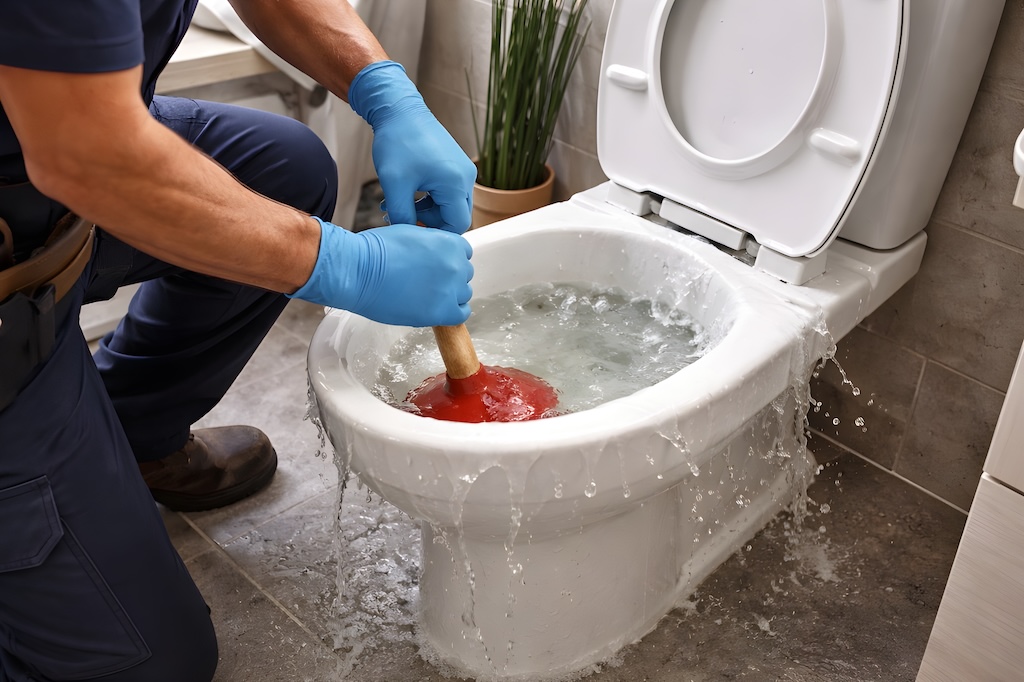
A blocked toilet is one of those problems that demands immediate attention. There’s no politely ignoring it. But when the same toilet keeps blocking once, twice, three times, that’s a sign something more than a single flush mishap is going on.
Here’s what’s actually causing it, what you can safely do at home, and when it’s time to bring in a licensed plumber.
Why Toilets Block in the First Place
Toilets are designed to handle human waste and toilet paper, and that’s about it. The most common causes of toilet blockages fall into a few clear categories.
1. What’s Being Flushed
This is the number one culprit. Despite being marketed as “flushable,” many products simply don’t break down the way toilet paper does. Items that cause blockages include:
- Wet wipes and “flushable” wipes
- Paper towels and tissues
- Cotton balls and cotton buds
- Nappies and sanitary products
- Excess toilet paper in a single flush
If there are children in the house, the list can also extend to toys, hair ties, and other small objects that have no business in a toilet bowl.
2. A Partial Blockage That’s Been Building
Not all blockages happen suddenly. Many develop gradually as waste and debris partially restrict the drain over weeks or months. You might notice the toilet taking longer to clear after flushing, or the water rising higher than usual before draining down. These are early warning signs of a partial blockage that will eventually become a full one.
3. Problems With the Trap
Every toilet has a built-in S-bend or trap, the curved section of pipe directly beneath the bowl. Its job is to hold water and stop sewer gases from entering your home. Blockages frequently occur in this section, particularly when non-degradable items get lodged in the curve.
4. A Blocked or Poorly Vented Drain Line
The blockage isn’t always in the toilet itself. The drain line running from your toilet to the main sewer can become partially blocked by grease, scale, roots, or debris, particularly in older Sydney homes. A poorly vented drain system can also cause slow drainage and gurgling sounds even when there’s no direct blockage.
5. Low-Flow Toilet Issues
Older low-flow models or toilets with a weak flush can struggle to move waste effectively through the drain line. If your toilet was installed prior to the mid-2000s and consistently struggles to clear, the flushing mechanism itself may be part of the issue.
What You Can Safely Try at Home
If the toilet is blocked and not overflowing, there are a couple of approaches worth trying before calling a plumber.
Use a Plunger Correctly
A good quality flange plunger (with the extended rubber flap at the base) is more effective than a standard cup plunger for toilets.
- Ensure there’s enough water in the bowl to cover the plunger head
- Place the plunger over the drain opening and create a seal
- Push down slowly, then pull up firmly; the suction is as important as the push
- Repeat 10–15 times with consistent pressure
- Flush to test
If the toilet clears partially but blocks again within a few days, the underlying cause hasn’t been resolved.
Avoid Harsh Chemical Drain Cleaners
Chemical drain cleaners are often the first thing people reach for, but they’re rarely effective on solid blockages and can cause long-term damage to older ceramic and pipe surfaces. They’re also a safety hazard if the toilet overflows while chemicals are present in the bowl.
When to Call a Plumber
A plumber should be your next call if:
- The toilet has blocked more than twice in a short period
- Multiple drains in your home are slow or blocked simultaneously
- You can hear gurgling from other drains when you flush
- The blockage doesn’t shift with a plunger after a reasonable attempt
- You suspect something has been accidentally flushed that is lodged in the trap
Repeated blockages in the same toilet almost always indicate something beyond a simple flush, whether that’s a persistent partial blockage in the drain line, a root intrusion, or a structural issue with the pipe.
What a Plumber Will Actually Do
A licensed plumber has access to tools that go well beyond a plunger.
Electric drain snake (auger): A long, flexible cable that reaches into the drain line and physically breaks up or retrieves blockages.
High-pressure water jetting: A pressurised water jet that clears build-up from the full internal diameter of the drain pipe, effective for scale, grease accumulation, and partial root intrusion.
CCTV drain camera: A small camera fed into the drain line that allows a plumber to see exactly what’s causing the problem and where. This is particularly useful for recurring blockages or older Sydney homes where the cause isn’t obvious.
Preventing Future Blockages
A few simple habits go a long way:
- Only flush toilet paper, nothing else, regardless of packaging claims
- Educate children early about what doesn’t go in the toilet
- Use a bin in the bathroom for wipes, cotton products, and sanitary items
- Consider a periodic drain health check if your home has older plumbing infrastructure
In Sydney’s older suburbs, particularly homes built before the 1980s, clay or cast-iron drain pipes are common. These are more prone to root intrusion and scale build-up than modern PVC pipes, and they benefit from routine maintenance.
Frequently Asked Questions
Why does my toilet keep blocking even though I only flush toilet paper? If you’re certain nothing inappropriate is being flushed, the issue is likely in the drain line rather than the toilet itself. A partial blockage, root intrusion, or collapsed section of pipe can cause repeated problems regardless of what’s being flushed.
Is it okay to use a plunger every time the toilet blocks? A plunger is fine for occasional use, but if you’re relying on it regularly, that’s a sign there’s an underlying problem that needs professional attention.
How do I know if my toilet blockage is connected to a bigger drain issue? If other drains in your home, such as the shower, basin, and laundry, are also slow or gurgling, the blockage is likely in the shared drain line rather than the toilet itself.
Can tree roots really reach my toilet drain? Yes, particularly in older Sydney suburbs with established trees. Tree roots are drawn to the moisture in drain pipes and can enter through even tiny cracks or joint gaps.
Need a Plumber for a Blocked Toilet in Sydney?
If your toilet keeps blocking and a plunger isn’t solving the problem, it’s time to find out what’s actually going on in your drain line.
The Service Fox team uses professional-grade equipment, including CCTV drain cameras and high-pressure jetting, to identify and fix the root cause of recurring blockages across Sydney and the Central Coast.
Contact Service Fox for fast, reliable blocked drain repairs.